Septic systems and excavating in Langley, since 1980
Stuart Bedard runs Bedard Excavating out of Langley. He's a Registered Onsite Wastewater Practitioner who installs, repairs and maintains Type 1, 2 and 3 septic systems, and most of what he builds is raised sand mounds with pressure distribution.
Or Stuart's cell, 604-328-9435
- Contractor
- Bedard Excavating Ltd
- Owner
- Stuart Bedard, ROWP
- Since
- 1980
- Office
- 604-513-7116
- Yard
- Langley, BC
Why so many lots around here end up with a sand mound
Around Langley the ground is mostly clay under a foot to 18 inches of topsoil, and it can change to rock, steep bedrock or fast draining gravel within a few lots. Closer to the water it's wet peat and fine silt a few feet above sea level, with the water table right there.
Ground like that can't treat septic effluent on its own. So a lot of systems in the Fraser Valley need a raised sand mound fed by a pump, a treatment unit, or both. That's the work Stuart has specialized in.
He builds them to keep the soil working: tracked, low ground pressure equipment, no traffic over the field before or after the pipe goes in, and the digging done when the ground is dry.
The tides will determine when you excavate for the tank, because the ground water level is affected by the tides.
The squirt test
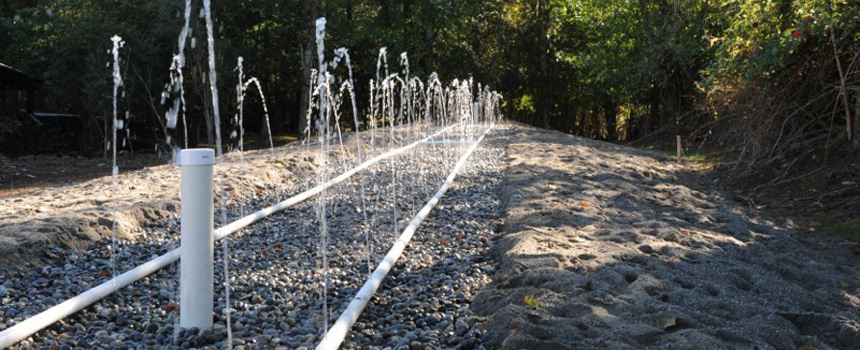
A pressure distribution field doses effluent through small holes drilled along each lateral, so the whole bed takes water instead of the first few feet. When a field is built, the laterals get a squirt test: the pump runs with the line ends open and every hole should throw about the same height. Run it below.
Even squirts from one end to the other. The whole bed is taking water.
Septic and excavating work
Residential and commercial jobs, from one septic field on an acreage in Langley to site servicing for a greenhouse in Delta.
Septic
Septic field preparation
Excavating and preparing the ground for a new field, laid out to what the system design calls for.
Septic system installs and repairs
New systems and repairs to failing ones, Types 1, 2 and 3, including sand mounds with pressure distribution.
Septic system design
Type 1 and Type 2 systems planned for the lot and the soil. Type 3 systems are installed to an engineer's design.
Septic system maintenance
Service on Type 1, 2 and 3 systems: flushing laterals, filters, pumps, and keeping the system on its maintenance plan.
Excavating and trucking
House excavations and driveways
Digging for new house foundations, and building driveways.
Site servicing and drainage
Water, sewer and drainage lines for new sites, and drainage work on existing properties.
Underground utilities
Trenching for and installing underground utility lines.
Equestrian facilities
Ground work for horse properties.
Land clearing and demolition
Clearing lots and taking down buildings.
Sand, gravel and topsoil
Supplied and delivered by gravel truck.
Some of the jobs
Greenhouses, RV parks, a school, a daycare, cell tower sites and homes, from Burnaby out to Chilliwack. Pick a job to see the photos.
The equipment
A tracked excavator on wide shoes, so it has a long reach and stays light on the ground it's building a field on, plus a gravel truck and a tilt bed trailer.
I don't allow any vehicle traffic over the disposal field area before or after installation of the pipes.
-
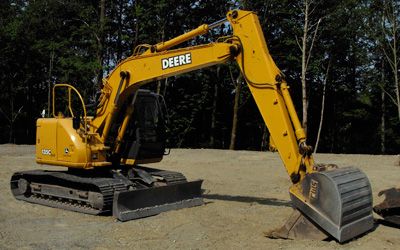
John Deere 135C excavator
With blade. Clearing grapple, 18 and 32 inch digging buckets and a 54 inch cleanup bucket.
-
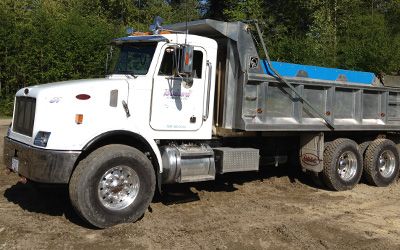
Peterbilt gravel truck
Sand, gravel and topsoil to the job.
-
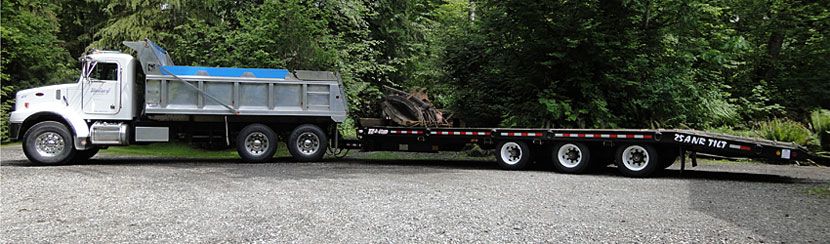
Tri-axle tilt bed trailer
Pulled by the Peterbilt.
Septic questions people ask
Who is allowed to install a septic system in BC?
In BC a septic system has to be planned and installed by an authorized person, either a Registered Onsite Wastewater Practitioner (ROWP) or a professional engineer, and the work is filed with the local health authority before it starts. Stuart Bedard is a ROWP.
What is the difference between a Type 1, 2 and 3 septic system?
It's how clean the effluent is before it reaches the field. Type 1 is treatment by a septic tank only. Type 2 has to consistently get below 45 mg/L of suspended solids and BOD. Type 3 has to get below 10 mg/L of each and keep fecal coliform low as well, which usually means a disinfection step. The soil, the water table and the lot decide which one a property needs.
What is a sand mound septic system?
A raised bed of specified sand built on top of the native ground, with pressure distribution laterals on top of it. It gives the effluent enough dry, open soil to be treated where the natural ground is too shallow, too tight or too wet. A lot of the clay and peat around the Fraser Valley needs one.
How often should a pressure distribution field be flushed?
Once a year is the usual recommendation for flushing the laterals, along with cleaning the effluent filter and pumping the tank when it needs it. Your system's maintenance plan has the schedule for your setup.
Do you deliver sand, gravel and topsoil?
Yes. Call the office with what you need and where it's going and you'll get a price.
Call for a quote
Tell Stuart where the property is and what you need done. Based in Langley, working across the Fraser Valley.
- Office
- 604-513-7116
- Cell
- 604-328-9435
- [email protected]
- Address
- 10050 McKinnon Cres.
Langley, BC V1M 3V4